BPO Company in Philippines

hybrid work in philippine bpo

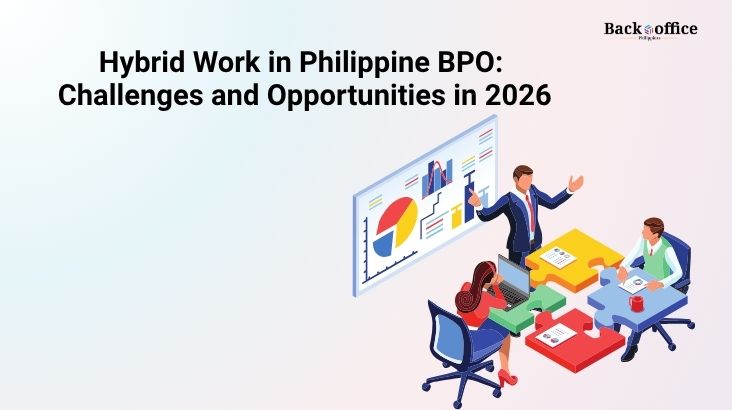
Hybrid Work in Philippine BPO: Challenges and Opportunities in 2026

The business process outsourcing industry in the Philippines has always been known for its adaptability. From handling global customer support to managing complex back-office operations, the sector continues to evolve alongside changing business needs. In 2026, one of the biggest transformations shaping the industry is the rise of hybrid work in Philippine BPO companies. Hybrid work is no longer a temporary arrangement. It has become a long-term strategy that combines remote and office-based work environments to improve flexibility, productivity, and employee satisfaction. While many outsourcing providers are embracing this model, it also introduces new operational and management challenges. Understanding the challenges and opportunities in Philippine BPO is important for businesses looking to maintain competitiveness in an increasingly digital world. The Growing Importance of Hybrid Work in Philippine BPO The demand for hybrid work in Philippine BPO companies continues to increase as employees seek better work-life balance and organizations aim to optimize operational costs. Companies are now investing heavily in cloud technologies, cybersecurity systems, digital collaboration tools, and remote workforce management platforms to support this transition. Global clients also prefer outsourcing partners that can ensure uninterrupted operations regardless of location-based disruptions. This flexibility has become a major advantage for Philippine outsourcing providers competing in the international market. As a result, hybrid work in Philippine is reshaping traditional outsourcing models and creating a more agile business environment. Challenges of Hybrid Work in Philippine BPO Although hybrid work offers many advantages, it also presents several operational and organizational challenges. 1. Cybersecurity and Data Privacy Risks One of the biggest concerns in hybrid work environments is maintaining data security. Employees working remotely may access company systems through unsecured networks or personal devices, increasing the risk of cyber threats and data breaches. For BPO companies handling sensitive customer information, compliance with international data privacy regulations remains a top priority. Organizations must invest in secure VPNs, endpoint protection, multi-factor authentication, and regular cybersecurity training. 2. Employee Engagement and Team Collaboration Maintaining company culture and employee engagement becomes more difficult when teams are spread across different locations. Communication gaps, isolation, and reduced collaboration can affect employee morale and productivity. Managers in hybrid work in Philippine BPO setups need to adopt better communication practices and digital collaboration tools to keep teams connected and aligned. 3. Performance Monitoring and Productivity Management Traditional supervision methods are less effective in hybrid environments. Companies must shift from time-based monitoring to performance-based evaluation systems. Measuring productivity fairly while maintaining employee trust is one of the key challenges and opportunities in Philippine BPO operations today. 4. Infrastructure and Connectivity Issues Reliable internet connectivity remains a challenge in some areas of the Philippines. Technical disruptions can affect customer service quality and operational efficiency. To overcome this issue, many BPO companies provide internet allowances, backup connectivity solutions, and remote IT support for employees working from home. Opportunities Created by Hybrid Work in Philippine BPO Despite the challenges, hybrid work models also open new growth opportunities for outsourcing companies and employees alike. 1. Access to a Wider Talent Pool Hybrid work allows companies to hire skilled professionals from different regions across the Philippines instead of limiting recruitment to major business districts. This expands workforce diversity and helps companies access specialized talent more efficiently. 2. Improved Employee Satisfaction and Retention Flexible work arrangements contribute significantly to employee well-being. Reduced commuting time, better work-life balance, and greater flexibility improve job satisfaction and reduce turnover rates. In a highly competitive outsourcing industry, retaining experienced employees is a major advantage. 3. Reduced Operational Costs Hybrid work helps BPO companies lower expenses related to office space, utilities, transportation, and facility management. These savings can be redirected toward technology investments, employee training, and service improvements. 4. Business Continuity and Operational Flexibility One of the major opportunities created by hybrid work in Philippine BPO is stronger business continuity planning. Companies can maintain operations during natural disasters, transportation disruptions, or public emergencies without major interruptions. This resilience strengthens client confidence and enhances long-term business sustainability. The Future of Hybrid Work in Philippine The future of hybrid work in Philippine outsourcing will depend heavily on technology adoption, leadership strategies, and workforce development. Companies that successfully balance flexibility, productivity, and employee engagement will gain a strong competitive advantage in the global outsourcing market. Artificial intelligence, automation, cloud computing, and advanced cybersecurity systems will continue supporting hybrid work environments. However, human connection, effective communication, and organizational culture will remain equally important. Businesses that adapt proactively to these evolving workplace trends will be better positioned to meet global client expectations in 2026 and beyond. Conclusion Hybrid work is transforming the outsourcing landscape and redefining how Philippine BPO companies operate. While there are several challenges and opportunities in Philippine BPO, organizations that embrace innovation and flexibility can achieve long-term growth and resilience. As the industry continues to evolve, hybrid work in Philippine BPO will play a critical role in shaping the future of outsourcing services. Companies that invest in technology, employee well-being, and operational adaptability will remain ahead in an increasingly competitive global market.

Hybrid Work in Philippine BPO: Challenges and Opportunities in 2026 Read More »

Philippine Outsourcing Services

How Philippine Outsourcing Services Support Digital Transformation

Digital transformation has become a crucial strategy for businesses aiming to remain competitive in today’s rapidly evolving market. Companies across industries are investing in advanced technologies, automation, cloud-based systems, and data-driven processes to improve efficiency and customer experience. However, implementing these changes internally can often be expensive and time-consuming. This is where Philippine Outsourcing Services are playing a major role in helping businesses successfully achieve Digital Transformation. The Philippines has emerged as one of the world’s leading outsourcing destinations, offering skilled professionals, cost-effective solutions, and reliable business support services. From administrative tasks and finance management to IT support and data processing, outsourcing providers in the Philippines help businesses streamline operations while focusing on growth and innovation. The Growing Importance of Digital Transformation Modern businesses operate in an environment where speed, efficiency, and customer satisfaction are critical. Traditional manual processes are no longer enough to keep up with increasing demands and market competition. Companies are now adopting digital solutions such as cloud computing, workflow automation, artificial intelligence, and digital document management systems. Digital Transformation is not just about technology implementation. It also involves improving business processes, enhancing communication, optimizing customer experiences, and enabling data-driven decision-making. Businesses that fail to adapt to these changes may struggle to remain competitive in the future. However, digital transformation projects often require specialized expertise, skilled manpower, and continuous operational support. This is why many organizations are turning to Philippine Outsourcing Services for assistance. Why Businesses Choose Philippine Outsourcing Services The Philippines has built a strong global reputation in the outsourcing industry due to its highly skilled workforce, strong English communication skills, and commitment to service excellence. Businesses worldwide rely on Philippine outsourcing providers to manage both simple and complex operational tasks. One of the main advantages of outsourcing to the Philippines is cost efficiency. Hiring and training in-house teams for digital transformation projects can be expensive. Outsourcing allows businesses to access experienced professionals at significantly lower operational costs while maintaining high-quality service standards. Additionally, Philippine outsourcing companies are highly adaptable to modern technologies and remote work environments. Their expertise in cloud platforms, customer support systems, accounting software, data management tools, and automation technologies makes them valuable partners for businesses undergoing digital transformation. How Philippine Outsourcing Services Support Digital Transformation 1. Streamlining Back-Office Operations Back-office tasks such as data entry, payroll processing, document management, and administrative support consume a significant amount of time and resources. Philippine Outsourcing Services help automate and streamline these functions, allowing businesses to improve efficiency and reduce manual workloads. By outsourcing repetitive administrative tasks, companies can focus more on strategic initiatives, innovation, and customer engagement. 2. Supporting Cloud-Based Business Systems Cloud technology is a major part of Digital Transformation. Businesses are increasingly shifting their operations to cloud-based platforms for better accessibility, collaboration, and data security. Philippine outsourcing providers assist organizations in managing cloud-based systems, organizing digital documents, maintaining databases, and supporting remote teams. This helps businesses improve operational flexibility while ensuring smooth day-to-day processes. 3. Enhancing Data Management and Accuracy Data is one of the most valuable assets for modern businesses. Accurate data processing and management are essential for making informed business decisions. Outsourcing companies in the Philippines provide professional data entry, data processing, and document digitization services that improve data accuracy and accessibility. Well-managed digital data allows businesses to analyze customer behavior, optimize operations, and identify growth opportunities more effectively. 4. Improving Customer Support Services Customer experience plays a major role in digital transformation strategies. Businesses need responsive, efficient, and personalized customer support systems to maintain customer satisfaction. Philippine outsourcing providers offer high-quality customer service and virtual assistance solutions that help businesses deliver seamless customer experiences. Their skilled support teams can manage inquiries, technical support, appointment scheduling, and client communication across multiple digital channels. 5. Supporting Scalable Business Growth As businesses expand, managing operations internally becomes more challenging. Philippine Outsourcing Services provide scalable support solutions that adapt to changing business needs. Whether a company requires additional administrative support, accounting services, HR assistance, or digital data management, outsourcing providers can quickly scale operations without the high costs associated with internal hiring and infrastructure expansion. The Future of Philippine Outsourcing in Digital Transformation The demand for outsourcing services is expected to continue growing in 2026 and beyond as more businesses embrace digital operations. Philippine outsourcing companies are continuously investing in advanced technologies, cybersecurity practices, automation tools, and workforce training to meet evolving global business demands. The integration of artificial intelligence and automation with human expertise is also shaping the future of the outsourcing industry. Rather than replacing human workers, technology is enabling outsourcing professionals to deliver faster, smarter, and more efficient business support services. As companies worldwide continue their digital transformation journeys, the Philippines remains a trusted outsourcing destination that combines technology, talent, and operational excellence. Conclusion Digital transformation is no longer optional for businesses aiming for long-term growth and competitiveness. Companies need reliable operational support, skilled professionals, and efficient systems to successfully adapt to modern business environments. Through cost-effective solutions, skilled talent, and technology-driven services, Philippine Outsourcing Services play a crucial role in helping businesses achieve successful Digital Transformation. From streamlining back-office operations to enhancing customer experiences and supporting scalable growth, outsourcing providers in the Philippines continue to empower businesses worldwide in their digital evolution.

How Philippine Outsourcing Services Support Digital Transformation Read More »

ai vs human data processing

AI vs Human Data Processing: What Businesses Should Choose in 2026?

In 2026, businesses are handling more data than ever before. From customer records and financial transactions to market research and operational analytics, data has become the backbone of decision-making. As organizations strive for speed, accuracy, and cost efficiency, the debate between AI Data Processing and Human Data Processing has taken center stage. So, which one should your business choose? The answer isn’t as simple as picking one over the other. Let’s explore the strengths, limitations, and ideal use cases of both approaches to help you make the right decision. Understanding AI Data Processing AI Data Processing refers to the use of artificial intelligence, machine learning, and automation tools to collect, process, and analyze data with minimal human intervention. Key Advantages of AI Data Processing 1. Speed and ScalabilityAI systems can process millions of data points in seconds. This makes them ideal for businesses dealing with large-scale data operations such as e-commerce platforms, financial institutions, and logistics companies. 2. Cost Efficiency in the Long RunWhile the initial investment in AI tools can be high, the long-term savings are significant. Businesses can reduce labor costs and improve productivity with automated workflows. 3. Consistency and AccuracyAI eliminates human errors caused by fatigue or oversight. Once trained, AI systems deliver consistent results, especially in repetitive tasks like data entry, invoice processing, and report generation. 4. Real-Time InsightsAI-powered systems can analyze data in real time, enabling faster decision-making and improved responsiveness to market changes. Understanding Human Data Processing Human Data Processing involves skilled professionals manually entering, verifying, analyzing, and interpreting data. Despite the rise of automation, human expertise remains critical in many areas. Key Advantages of Human Data Processing 1. Contextual UnderstandingHumans can interpret complex data, understand nuances, and make judgment-based decisions that AI may struggle with. 2. Flexibility and AdaptabilityUnlike AI, humans can quickly adapt to new tasks, unexpected changes, or unstructured data formats without requiring extensive reprogramming. 3. Quality Control and ValidationHuman oversight ensures higher accuracy in tasks that require critical thinking, such as data validation, quality checks, and exception handling. 4. Better Handling of Unstructured DataDocuments, handwritten notes, images, and ambiguous data often require human interpretation for accurate processing. AI vs Human Data Processing: A Direct Comparison When comparing AI vs Human Data Processing, it’s important to evaluate based on your business needs: Factor AI Data Processing Human Data Processing Speed Extremely fast Slower Cost Lower long-term Ongoing labor costs Accuracy High (for structured data) High (for complex data) Flexibility Limited to programming Highly adaptable Scalability Excellent Limited This comparison clearly shows that neither approach is universally superior. Instead, each has its strengths depending on the type of data and task involved. When Should Businesses Choose AI Data Processing? AI is the best choice when: For example, industries like banking, e-commerce, and telecommunications benefit greatly from AI-driven automation. When Should Businesses Choose Human Data Processing? Human expertise is essential when: Industries such as healthcare, legal services, and research heavily rely on human intelligence for accurate outcomes. The Best Approach in 2026: A Hybrid Model In reality, the smartest strategy in 2026 is not choosing between AI and humans—but combining both. A hybrid model leverages the speed of AI Data Processing with the intelligence of Human Data Processing. AI can handle bulk data processing and automation, while humans focus on validation, exception handling, and strategic insights. Benefits of a Hybrid Approach Many leading BPO companies, including Back Office Philippines, are adopting this approach to deliver high-quality data services to global clients. Final Thoughts The debate around AI vs Human Data Processing is not about replacement—it’s about collaboration. AI brings speed, efficiency, and scalability, while humans provide context, judgment, and adaptability. For businesses aiming to stay competitive in 2026, the key is to strike the right balance. By integrating AI-driven automation with skilled human expertise, organizations can achieve optimal performance, reduce costs, and unlock the full potential of their data.

AI vs Human Data Processing: What Businesses Should Choose in 2026? Read More »

philippines vs. india

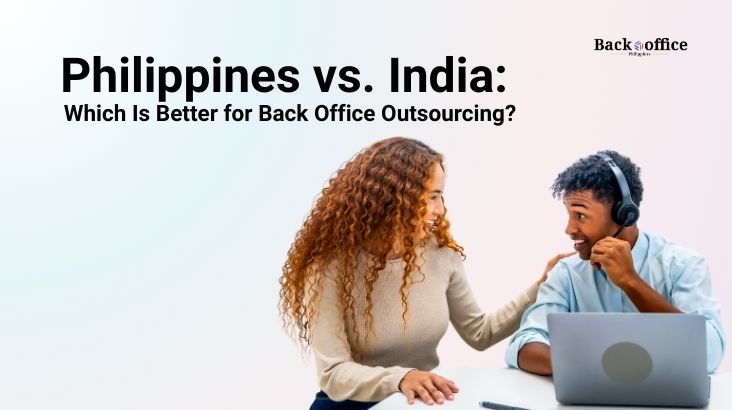
Philippines vs. India: Which Is Better for Back Office Outsourcing?

When companies explore global outsourcing destinations, one comparison consistently stands out: Philippines vs. India Outsourcing. Both countries dominate the global outsourcing industry and have built strong reputations over decades. But when it comes to Back Office Outsourcing, which destination truly delivers better value, efficiency, and long-term partnership potential? The Philippines has positioned itself as one of the world’s leading outsourcing hubs, particularly in customer support and back-office services. Over the last two decades, it has expanded beyond call centers into finance, healthcare support, data processing, HR services, and knowledge process outsourcing. The country is known for: Back office services in the Philippines often emphasize quality, communication, and long-term collaboration. India is often considered the pioneer of modern outsourcing. It has a massive talent pool and a strong foundation in IT services, software development, engineering, and technical back-office functions. India’s strengths include: When comparing Philippines vs. India Outsourcing, India is often seen as the go-to for technology-driven services. 📊 Cost Comparison Cost is one of the biggest deciding factors in Back Office Outsourcing. However, businesses should evaluate total cost of ownership — including training, management time, error rates, and communication efficiency — rather than just hourly wages. In many cases, companies find that smoother communication in the Philippines reduces operational friction, indirectly saving costs. 🗣️ Communication & Cultural Compatibility This is where the Philippines often stands out in the Philippines vs. India Outsourcing discussion. English Proficiency The Philippines consistently ranks high in global English proficiency indexes. English is widely used in education, business, and government. India also has strong English-speaking professionals, especially in urban centers. However, accent neutrality and Western conversational familiarity are often cited as stronger advantages in the Philippines. Cultural Alignment The Philippines has strong Western cultural influences, which makes collaboration easier for businesses in the US, UK, Australia, and Canada. For companies requiring frequent interaction, reporting, or client-facing back-office roles, this cultural alignment can be a major advantage. 💼 Talent Pool & Skill Specialization Both countries offer large and skilled workforces, but their strengths differ. India’s Strengths Philippines’ Strengths If your business requires highly technical integration, India may have a slight edge. For process-driven, communication-heavy Back Office Outsourcing, the Philippines is often preferred. 🏢 Infrastructure & Business Environment Both countries have well-established outsourcing ecosystems with: India’s outsourcing industry is older and larger in scale. However, the Philippines has rapidly modernized and built strong compliance frameworks, particularly for industries like healthcare and finance. For businesses concerned about data protection and compliance, both destinations now meet international standards when working with reputable providers. ⏰ Time Zone Advantage Both countries operate in time zones favorable for global operations. Many outsourcing providers in both countries offer 24/7 operations, making round-the-clock support feasible regardless of location. 📈 Scalability & Flexibility India’s larger population allows for rapid scaling of large teams. Enterprises looking for thousands of employees across multiple departments may benefit from India’s scale. The Philippines, while smaller in population, offers highly flexible mid-sized teams that focus on quality and long-term partnerships. If your priority is building a dedicated offshore team rather than simply outsourcing tasks, the Philippines model may feel more personalized. 🔍 So, Which Is Better? The Philippines vs. India Outsourcing debate doesn’t have a one-size-fits-all answer. Choose India if: Choose the Philippines if: 🚀 Final Thoughts Ultimately, the best outsourcing destination depends on your operational priorities, budget, and business model. Both the Philippines and India are global leaders in Back Office Outsourcing, and both offer proven track records. Instead of asking which country is “better,” businesses should ask:Which destination aligns best with our goals, processes, and long-term strategy? By evaluating communication, expertise, cost structure, and scalability, you can make a confident outsourcing decision that supports sustainable growth in 2026 and beyond.

Philippines vs. India: Which Is Better for Back Office Outsourcing? Read More »

virtual assistant services in the philippines

Virtual Assistant Services in the Philippines: Scalable Back Office Support for SMEs

Small and medium-sized enterprises (SMEs) face constant pressure to reduce costs, improve efficiency, and scale operations quickly. Managing back-office tasks internally can drain valuable time and resources that should be focused on growth and innovation. This is where Virtual Assistant Services step in as a strategic solution. In recent years, Virtual Assistant Services in the Philippines have become a preferred choice for global SMEs seeking reliable, skilled, and cost-effective back-office support. Why SMEs Need Virtual Assistant Services SMEs often operate with lean teams. Founders and managers handle multiple responsibilities, from marketing and sales to administration and customer service. As the business grows, administrative and operational tasks increase, creating bottlenecks. Virtual Assistant Services allow businesses to delegate non-core tasks such as: By outsourcing these functions, SMEs can focus on strategic growth activities while maintaining smooth daily operations. Why Choose Virtual Assistant Services in the Philippines? The Philippines has established itself as one of the world’s leading outsourcing destinations. Several factors contribute to the growing demand for Virtual Assistant Services in the Philippines: 1. Highly Skilled English-Speaking Workforce The Philippines is known for its strong English proficiency and Western business familiarity. This ensures seamless communication and minimal cultural barriers when working with clients from the US, UK, Australia, and other global markets. 2. Cost-Effective Solutions Hiring full-time in-house staff involves salaries, benefits, infrastructure, and training costs. Virtual Assistant Services in the Philippines provide access to skilled professionals at a fraction of the cost, helping SMEs maximize ROI without compromising quality. 3. Scalability and Flexibility One of the biggest advantages of Virtual Assistant Services is scalability. Whether a business needs part-time support during peak seasons or full-time assistance for long-term projects, services can be adjusted based on demand. 4. Strong BPO Infrastructure The Philippines has a mature outsourcing ecosystem, supported by reliable internet infrastructure, government support, and experienced BPO companies that ensure data security and compliance standards. How Virtual Assistants Support SME Growth Virtual assistants do more than just administrative tasks—they contribute directly to business growth. Improved Productivity Delegating repetitive tasks frees up leadership and core teams to focus on revenue-generating activities. This increases overall productivity and efficiency. Faster Turnaround Time With dedicated virtual assistants handling back-office work, tasks are completed quickly and accurately, reducing delays and improving customer satisfaction. Enhanced Customer Experience Virtual assistants can manage customer inquiries, follow-ups, and support tickets, ensuring timely responses and improved client relationships. Business Continuity Outsourcing partners in the Philippines often provide backup staff and structured processes, reducing the risks associated with employee turnover. Industries That Benefit from Virtual Assistant Services Virtual Assistant Services in the Philippines cater to a wide range of industries, including: For SMEs in these sectors, outsourcing back-office tasks can significantly streamline operations. Key Considerations When Choosing a Provider While Virtual Assistant Services offer clear benefits, selecting the right outsourcing partner is critical. SMEs should consider: A reliable provider ensures quality output, secure data handling, and measurable performance metrics. The Future of Virtual Assistant Services in the Philippines As technology evolves, Virtual Assistant Services are also advancing. Many providers now integrate automation tools, AI-driven task management, and cloud-based collaboration platforms to enhance efficiency. However, human expertise remains essential for decision-making, personalized communication, and quality control. In 2026 and beyond, SMEs will increasingly rely on Virtual Assistant Services in the Philippines not just for cost savings, but for strategic growth support. The ability to scale quickly, maintain operational efficiency, and access global talent will continue to make the Philippines a leading outsourcing hub. Conclusion For SMEs aiming to grow without increasing overhead costs, Virtual Assistant Services provide a smart and scalable solution. By partnering with providers offering Virtual Assistant Services in the Philippines, businesses gain access to skilled professionals, flexible support models, and reliable back-office management. In a competitive business environment, outsourcing is no longer just a cost-cutting measure—it is a strategic move that empowers SMEs to focus on innovation, customer satisfaction, and long-term success.

Virtual Assistant Services in the Philippines: Scalable Back Office Support for SMEs Read More »

outsourcing to the philippines in 2026

Outsourcing to the Philippines in 2026: Cost, Talent & Technology Advantages

As global businesses face rising operational costs and increasing competition, outsourcing has become a strategic solution for growth. In 2026, Outsourcing to the Philippines continues to stand out as one of the most effective ways for companies to reduce expenses, access skilled talent, and leverage modern technology. With a mature BPO ecosystem and a future-ready workforce, the Philippines remains a preferred destination for back-office outsourcing worldwide. Let’s explore why Outsourcing to the Philippines in 2026 delivers unmatched advantages in cost, talent, and technology. Lower Cost of Outsourcing Without Compromising Quality One of the biggest reasons companies choose Outsourcing Philippines is affordability. The Cost of Outsourcing in the Philippines remains significantly lower than in Western countries, while maintaining high service standards. Businesses can save up to 50–70% on operational expenses by outsourcing back-office functions such as data processing, finance and accounting, payroll, document management, and administrative support. Lower labor costs, reduced infrastructure expenses, and flexible staffing models allow companies to scale efficiently without the burden of hiring full-time in-house teams. In 2026, Philippine outsourcing providers also offer customizable engagement models, enabling businesses to pay only for the services they need. This cost efficiency allows startups, SMEs, and enterprises alike to reinvest savings into innovation and business growth. Access to a Highly Skilled and English-Proficient Workforce Talent is another major advantage of Outsourcing to the Philippines. The country produces thousands of college graduates each year in fields such as business administration, finance, IT, healthcare, and engineering. Filipino professionals are known for their strong work ethic, adaptability, and excellent communication skills. English is widely spoken, making collaboration with international clients seamless and efficient. This cultural compatibility reduces training time and improves productivity from day one. In 2026, Philippine outsourcing teams are increasingly specialized, offering expertise in data annotation, financial services, healthcare support, e-commerce operations, and virtual assistance. Companies benefit from accessing experienced professionals without the challenges of recruitment, onboarding, and retention. Technology-Driven Outsourcing Solutions Technology plays a vital role in shaping Outsourcing to the Philippines in 2026. BPO providers are embracing automation, AI-powered tools, and cloud platforms to enhance service delivery and accuracy. Robotic Process Automation (RPA) is widely used to streamline repetitive tasks such as invoice processing, data entry, and report generation. AI tools support data analysis and quality control, while secure cloud systems enable real-time collaboration across global teams. Additionally, Philippine outsourcing companies prioritize data security and compliance, implementing strict protocols to protect sensitive business information. This technology-first approach ensures faster turnaround times, higher accuracy, and greater transparency for clients. Scalability and Business Flexibility Modern businesses need agility, and Outsourcing Philippines provides exactly that. Whether you need to scale operations during peak seasons or expand into new markets, outsourcing offers flexible workforce solutions without long-term commitments. Instead of investing in office space, equipment, and HR resources, companies can instantly access dedicated teams ready to support their evolving needs. This scalability empowers organizations to respond quickly to market changes while maintaining operational efficiency. A Strategic Advantage for Global Growth Beyond cost savings and talent access, Outsourcing to the Philippines provides strategic value. Companies gain a reliable back-office partner that supports core business functions, allowing internal teams to focus on innovation, customer engagement, and revenue generation. With continuous improvements in infrastructure, remote work capabilities, and digital transformation, the Philippines is positioned as a future-ready outsourcing destination. Businesses that embrace outsourcing in 2026 gain a competitive edge by combining human expertise with smart technology. Final Thoughts Outsourcing to the Philippines in 2026 offers a powerful combination of affordable services, skilled professionals, and advanced technology. The competitive Cost of Outsourcing, paired with a highly capable workforce and modern outsourcing infrastructure, makes the Philippines an ideal partner for businesses seeking sustainable growth. By choosing Outsourcing Philippines, companies can streamline operations, reduce expenses, and scale with confidence—while delivering high-quality services to their customers. If your business is ready to optimize back-office operations and stay ahead in 2026, outsourcing to the Philippines could be your smartest move yet.

Outsourcing to the Philippines in 2026: Cost, Talent & Technology Advantages Read More »

top benefits of outsourcing back office functions to the philippines

Top Benefits of Outsourcing Back Office Functions to the Philippines

In today’s competitive business environment, operational efficiency is no longer optional—it is a survival requirement. As organizations scale, internal teams often get weighed down by repetitive, process-driven tasks that consume time, money, and management bandwidth without directly contributing to revenue. This is why companies across the globe are increasingly turning to outsourcing. Among all destinations, the Philippines has emerged as a clear leader. Understanding the benefits of outsourcing back office functions to the Philippines can help businesses unlock growth while maintaining operational control. 1. Significant Cost Savings Without Quality Trade-Offs One of the most compelling benefits of outsourcing back office operations is cost efficiency. Businesses can reduce labor expenses by up to 60–70% compared to in-house teams in Western countries. However, lower cost does not mean lower quality. Philippine BPO providers maintain strong process controls, quality benchmarks, and performance metrics that ensure consistent output. By outsourcing tasks such as data entry, payroll processing, document digitization, accounting support, and administrative services, companies eliminate recruitment costs, training expenses, infrastructure investments, and employee overheads—freeing capital for strategic initiatives. 2. Access to a Highly Skilled and Educated Workforce The Philippines produces a large pool of college graduates every year, particularly in fields such as business administration, finance, accounting, IT, and healthcare support. This talent base is one of the strongest benefits of outsourcing to Philippines, especially for data-intensive and compliance-driven back-office functions. Professionals are trained to follow international standards, adapt to global workflows, and deliver high accuracy in tasks such as data processing, finance & accounting, and data annotation. Many outsourcing teams are also experienced in industry-specific requirements, including healthcare, insurance, logistics, and e-commerce. 3. Strong English Proficiency and Cultural Compatibility Effective communication is critical for back-office outsourcing success. The Philippines consistently ranks among the top English-speaking countries in Asia. This linguistic advantage minimizes misunderstandings, speeds up onboarding, and ensures smooth collaboration with international clients. Beyond language, cultural compatibility plays a major role. Filipino professionals are familiar with Western business practices, customer expectations, and workplace etiquette, making them easy to integrate into existing operational frameworks. 4. Scalability and Operational Flexibility Another major advantage among the benefits of outsourcing back office functions is scalability. Businesses can easily expand or downsize their outsourced teams based on seasonal demand, business growth, or market fluctuations—without the complexities of hiring or layoffs. Whether you need a small team for pilot operations or a large workforce to manage high-volume data processing, Philippine BPO providers offer flexible engagement models that align with your operational needs and budget. 5. Enhanced Focus on Core Business Activities Back-office tasks are essential, but they rarely drive innovation or revenue. Outsourcing allows internal teams to focus on core competencies such as strategy, sales, product development, and customer experience. By delegating time-consuming functions like payroll management, document conversion, data entry, and administrative support, leadership teams gain the mental bandwidth needed to make faster, more informed decisions that directly impact business growth. 6. Robust Data Security and Compliance Standards Security concerns are often a key consideration in outsourcing decisions. Reputable providers in the Philippines implement strict data protection protocols, access controls, NDAs, and compliance frameworks aligned with global standards such as HIPAA, GDPR, and ISO. This commitment to security strengthens trust and makes data-heavy operations safer to outsource—another critical factor among the benefits of outsourcing to Philippines for regulated industries like healthcare, finance, and insurance. 7. Time Zone Advantage and 24/7 Operations The Philippines’ ability to support round-the-clock operations is a strategic advantage for global businesses. BPO teams can work in multiple time zones, ensuring faster turnaround times, overnight processing, and continuous workflow cycles. This 24/7 capability improves productivity, shortens project timelines, and enables businesses to deliver faster outcomes to their customers. 8. Proven Global BPO Ecosystem The Philippines has a mature and well-established BPO ecosystem supported by government initiatives, infrastructure investment, and industry expertise. This maturity reduces operational risk and ensures service continuity—making it a trusted outsourcing destination for companies worldwide. Conclusion The benefits of outsourcing back office functions to the Philippines go far beyond cost reduction. Businesses gain access to skilled talent, operational flexibility, strong communication, data security, and the ability to scale efficiently. For organizations looking to streamline operations without compromising quality, outsourcing to the Philippines is not just a tactical decision—it’s a strategic advantage. By partnering with a reliable Philippine back-office service provider, businesses can transform routine operations into a growth enabler and stay competitive in an increasingly demanding global market.

Top Benefits of Outsourcing Back Office Functions to the Philippines Read More »

what’s the time zone advantage of outsourcing to the philippines

What’s the Time Zone Advantage of Outsourcing to the Philippines?

In today’s global business environment, companies are no longer restricted by geography. With the rise of remote work and offshore partnerships, organizations are increasingly looking for destinations that offer both skilled talent and operational efficiency. One of the most powerful yet often underestimated benefits of Outsourcing to the Philippines is its strategic time zone advantage. Beyond cost savings and a highly skilled workforce, the Philippines provides businesses with extended operational hours, faster turnaround times, and seamless global collaboration. Let’s explore why time zone alignment plays a crucial role in outsourcing success and how companies can leverage this advantage. Understanding the Philippines Time Zone The Philippines operates on Philippine Standard Time (PST), which is UTC +8. This position makes the country uniquely suitable for serving clients across multiple regions, including North America, Australia, Europe, and parts of Asia. What makes this particularly valuable is the Filipino workforce’s flexibility. Many outsourcing teams in the Philippines are accustomed to working night shifts, rotating schedules, or overlapping business hours to match client time zones. This adaptability is a key factor behind the growing popularity of Outsourcing in Philippines for global businesses. 24/7 Business Operations Without the Overhead One of the biggest advantages of outsourcing to a different time zone is the ability to run operations around the clock. When you partner with a Philippine outsourcing provider, work doesn’t stop when your local office closes. For example: This continuous workflow is a major Advantage of Outsourcing to the Philippines, especially for data processing, finance support, administrative tasks, and back-office operations. Faster Turnaround Times and Improved Productivity Time zone differences allow businesses to implement a “follow-the-sun” model. Tasks completed overnight reduce delays and significantly shorten turnaround times. This is especially valuable for industries that rely on speed and accuracy, such as healthcare, finance, e-commerce, and logistics. By leveraging Outsourcing to the Philippines, companies can: This model enhances productivity without increasing internal workload or hiring additional in-house staff. Strong Overlap With Global Markets Despite the time difference, outsourcing teams in the Philippines often work schedules aligned with client business hours. Philippine professionals are well-known for their willingness to accommodate international time zones, making collaboration smooth and efficient. This results in: This flexibility further strengthens the Advantage of Outsourcing to the Philippines, ensuring that distance never becomes a barrier to efficiency. Reduced Operational Stress for In-House Teams Managing back-office operations internally can be demanding, especially when deadlines are tight. Outsourcing allows internal teams to focus on strategic priorities while offshore teams handle repetitive and time-consuming processes. With Outsourcing in Philippines, businesses can: The time zone advantage ensures that work progresses even when your core team is offline, creating a more sustainable operational structure. Ideal for Global Expansion and Scalability As businesses grow internationally, time zone coverage becomes increasingly important. The Philippines serves as an excellent outsourcing hub for companies planning to expand into multiple regions. Whether you are supporting customers, managing data, or handling financial operations, Outsourcing to the Philippines enables scalability without the complexity of managing multiple regional offices. The time zone flexibility allows businesses to adapt quickly to market demands and seasonal workload fluctuations. Why Businesses Continue Choosing the Philippines The success of outsourcing partnerships depends on more than just labor costs. Cultural compatibility, communication skills, and operational flexibility all play a role. Filipino professionals are highly proficient in English, culturally aligned with Western business practices, and experienced in remote collaboration. When combined with the time zone advantage, these factors make Outsourcing in Philippines a long-term strategic decision rather than a short-term cost-saving measure. Final Thoughts The time zone advantage is a powerful driver behind the global success of Philippine outsourcing. From 24/7 operations and faster turnaround times to improved productivity and reduced internal stress, the benefits are clear. For businesses looking to optimize efficiency, scale operations, and stay competitive, the Advantage of Outsourcing to the Philippines goes far beyond cost—it’s about time, speed, and sustainable growth. By choosing the right outsourcing partner in the Philippines, companies can transform time zone differences into a strategic business advantage.

What’s the Time Zone Advantage of Outsourcing to the Philippines? Read More »

why the philippines is a top choice for back office outsourcing

Why the Philippines Is a Top Choice for Back Office Outsourcing

In today’s competitive business landscape, companies are constantly looking for ways to reduce operational costs, improve efficiency, and focus on their core competencies. One proven strategy that continues to gain momentum is Back office outsourcing. Among all global outsourcing destinations, the Philippines has emerged as a clear leader—trusted by startups, SMEs, and large enterprises alike. This is why Outsourcing in Philippines is considered one of the smartest business decisions today. A Skilled and Educated Workforce One of the strongest reasons the country stands out is its highly skilled workforce. The Philippines produces thousands of college graduates every year across fields such as business administration, accounting, IT, healthcare, and data management. This makes it an ideal hub for Back office outsourcing services like data entry, finance and accounting, payroll processing, document management, and administrative support. Professionals at Backoffice Philippines are trained to handle complex processes with accuracy and efficiency, ensuring businesses receive reliable back-office support without compromising quality. Strong English Proficiency and Communication Skills The Philippines consistently ranks among the top English-speaking countries in Asia. English is widely used in education, business, and government, making communication seamless for global clients. This advantage plays a crucial role in Outsourcing in Philippines, especially for tasks that require regular interaction, detailed reporting, or collaboration across time zones. Clear communication minimizes errors, improves turnaround time, and ensures that outsourced teams work as an extension of your in-house staff. Cost-Effective Back Office Outsourcing Solutions Cost savings remain a major driver for Back office outsourcing, and the Philippines delivers exceptional value. Businesses can significantly reduce expenses related to salaries, infrastructure, recruitment, and training while still accessing high-quality services. By partnering with Backoffice Philippines, companies can optimize operational costs without sacrificing performance. This cost efficiency allows businesses to reinvest savings into growth, innovation, and customer experience. Time Zone Advantage and 24/7 Support The Philippines offers a strategic time zone advantage for businesses in the US, UK, Australia, and other global markets. Many outsourcing providers offer round-the-clock support, enabling faster processing, overnight task completion, and continuous operations. This makes Outsourcing in Philippines especially beneficial for businesses that need quick turnaround times, real-time data updates, or 24/7 back-office operations. Proven Expertise Across Multiple Industries From healthcare and finance to eCommerce and logistics, the Philippines has developed deep expertise across industries. Back office outsourcing providers are well-versed in industry-specific processes, compliance standards, and best practices. Backoffice Philippines delivers tailored solutions for businesses of all sizes, ensuring accuracy, scalability, and compliance across various back-office functions. Robust Data Security and Compliance Standards Data security is a top concern when outsourcing back-office operations. Reputable outsourcing companies in the Philippines follow strict data protection protocols, secure IT infrastructure, and international compliance standards. With Backoffice Philippines, businesses can be confident that sensitive data—financial records, customer information, or healthcare documents—is handled securely and professionally. Cultural Compatibility and Strong Work Ethic Another key factor driving Outsourcing in Philippines is cultural compatibility. Filipino professionals are known for their strong work ethic, adaptability, and customer-centric mindset. They value long-term relationships, accountability, and continuous improvement. This cultural alignment helps build trust, improves collaboration, and ensures smooth integration with global business teams. Scalability and Flexibility for Growing Businesses Business needs change over time, and outsourcing partners must be able to scale accordingly. The Philippines offers unmatched flexibility in scaling teams up or down based on workload, seasonality, or growth plans. By choosing Backoffice Philippines, companies gain access to scalable Back office outsourcing solutions that grow alongside their business—without the challenges of hiring or infrastructure expansion. Conclusion The Philippines has firmly established itself as a global leader in Back office outsourcing thanks to its skilled workforce, cost efficiency, strong communication capabilities, and commitment to quality. For businesses seeking reliable, secure, and scalable solutions, Outsourcing in Philippines is a strategic move that delivers long-term value. With a trusted partner like Backoffice Philippines, organizations can streamline operations, reduce costs, and focus on what truly matters—driving growth and success.

Why the Philippines Is a Top Choice for Back Office Outsourcing Read More »

top back office outsourcing trends to watch in 2026

Top Back Office Outsourcing Trends to Watch in 2026

In today’s fast-moving global economy, Back office outsourcing continues to be a strategic lever for companies looking to optimize operations, enhance efficiency, and stay competitive. As we move into 2026, smart businesses are evolving how they outsource back-office functions—from traditional data entry and admin tasks to cutting-edge roles involving analytics, compliance, and AI-enhanced processes. Let’s explore the Top Back Office Outsourcing Trends to Watch in 2026 and how destinations like the Back Office Philippines are shaping the future of this industry. Human + AI Integration: The New Operational Standard One of the biggest shifts in back-office outsourcing is the blend of human intelligence with artificial intelligence (AI). Instead of replacing people, AI is increasingly being used to augment human capability—handling repetitive processes like sorting data, preliminary reconciliation, or document classification while human specialists focus on judgment-based tasks. This synergy not only speeds up turnaround but also minimizes errors and enhances overall quality. Hyperautomation & Intelligent Process Workflows Hyperautomation refers to the layered use of AI, robotic process automation (RPA), and analytics to streamline complex workflows. By 2026, hyperautomation will be the norm in advanced back-office outsourcing setups, enabling tasks like invoice processing, claims handling, or compliance checks to be partially automated before human review. Businesses partnering with outsourcing hubs such as the Back Office Philippines are already adopting these technologies to deliver faster results with higher accuracy. Rise of Industry-Specific Outsourcing Roles Gone are the days when back-office outsourcing meant general admin support. In 2026, companies want domain-specific expertise—teams with deep knowledge in healthcare billing, finance reconciliation, logistics crew reporting, or legal document workflows. This trend means outsourcing providers must offer specialized talent instead of generic assistants, creating a premium market for skilled professionals. Cloud-Enabled Collaboration & Real-Time Dashboards Cloud tools have become indispensable. Modern outsourcing setups now operate with shared platforms that give clients real-time access to workflows, updates, and performance metrics across functions like bookkeeping, HR admin, and CRM upkeep. Expect 2026 to see even tighter cloud integrations where stakeholders can monitor back-office KPIs without waiting for daily or weekly reports. 24/7 Operational Support Across Time Zones Globalized business models demand continuous operations. More companies are leveraging global talent across multiple time zones to ensure 24/7 productivity. Filipino back-office teams are already a top choice for round-the-clock support—particularly for U.S., European, and Australian clients who need next-day processing or overnight reporting. This trend reinforces the value of outsourcing destinations like the Back Office Philippines for seamless global coverage. Small, Scalable Outsourced Teams for SMBs Small and medium-sized enterprises (SMEs) are now tapping into micro-outsourcing models—tiny, dedicated back-office teams tailor-built for specific needs (e.g., one bookkeeping specialist or a two-person admin group). These lean setups provide flexibility, lower costs, and quick scalability—making outsourcing more accessible than ever for fast-growing businesses. Emphasis on Accuracy & Compliance Over Cost Savings While cost reduction was once the primary driver for outsourcing, accuracy and compliance are now taking center stage. Companies are choosing outsourcing partners who can ensure high-quality outputs and strict adherence to regulatory standards—especially in sectors like healthcare, finance, and legal services. Expect outsourcing decisions in 2026 to be driven more by risk mitigation and quality assurance than simple hourly cost arbitrage. Transparent Pricing & Bundled Outsourcing Packages Predictable and transparent pricing models are becoming industry norms. Instead of opaque hourly rates, many outsourcing providers now offer fixed monthly plans, sometimes bundling software tools, specialized staff, and quality assurance into a single cost-effective package. For clients, this simplifies budgeting and fosters stronger long-term partnerships. Remote & Hybrid Work Models for Outsourced Teams Remote and hybrid work arrangements are now deeply integrated into outsourcing operations. Many back-office teams operate with flexibility—working partly from office spaces and partially from home environments, which boosts talent recruitment and retention while cutting operational overheads. This hybrid model also supports continuity in case of local disruptions. Shift from Cost Center to Strategic Growth Driver The most forward-thinking companies are no longer just outsourcing to save money. They are positioning back-office outsourcing as a strategic growth engine—using it to accelerate innovation, enter new markets, and scale operations faster than competitors. Outsourcing partners who can align with business goals—and not just offer transactional services—will lead the pack in 2026. Conclusion As we approach 2026, Back office outsourcing continues its transformation from being a cost-cutting tactic into a key strategic asset. Whether driven by AI integration, niche expertise, cloud collaboration, or 24/7 global operations, the future of back-office support is dynamic and full of opportunity. And with hubs like the Back Office Philippines leading the way in innovation, cost-effectiveness, and service excellence, global businesses have ever-more powerful options to streamline their operations and unlock growth.

Top Back Office Outsourcing Trends to Watch in 2026 Read More »